 Freezedry Harvest
Food safety
Certified plant,
traceable lots.
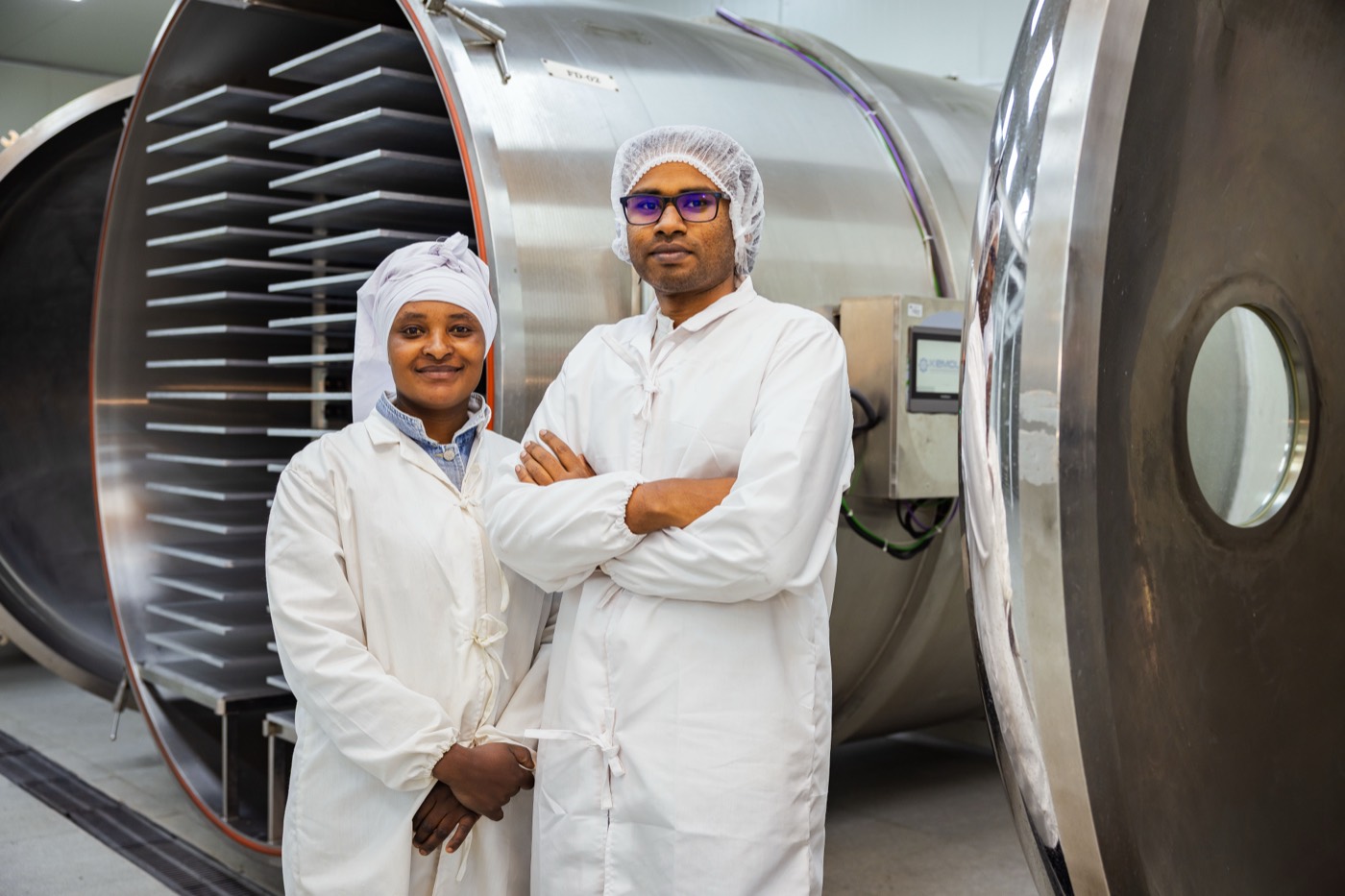
FD Harvest grows, freeze dries and packs on one site at Lake Naivasha under a HACCP-based food safety management system certified to FSSC 22000 by Intertek. The plant is an FDA-registered food facility with a PCQI on staff and is OU kosher. Lots are micro-tested in our own lab and traced from field to pouch.
01 — The system
A HACCP-based system, certified to FSSC 22000.
Our food safety management system is built on HACCP: the hazards at each step from field to pouch are identified, and the controls that keep them in check are written down, monitored and recorded. The system is certified to FSSC 22000 by Intertek, an independent certification body accredited by UKAS.
FSSC 22000 is a food safety certification scheme recognized by the Global Food Safety Initiative (GFSI). For your quality team, that means an independent auditor has checked our system against a published standard, so a supplier-approval file can start from the certificate and the audit scope rather than from scratch.
The same system covers the whole site. Farms, grading hall, freezers, freeze dryers, cutting, packing line and laboratory sit inside one export processing zone at Lake Naivasha, under one management. There is no third-party drying or packing step to approve separately.
02 — What each one means for your file
Certificates and controls, and what they give your supplier file.
Each line below is something buyers' quality teams ask for during supplier approval. The right-hand column says, in general terms, how it is usually used. Certificates are available on request.
| What it is | How it is used in your food-safety file | |
|---|---|---|
| FSSC 22000 (Intertek) | A GFSI-recognized certification of the food safety management system, HACCP-based, audited by an accredited certification body. | Evidence that the supplier runs an audited food safety system. Many approval procedures accept a GFSI-recognized certificate in place of, or ahead of, a supplier audit. |
| FDA-registered food facility | The plant is registered with the US Food and Drug Administration as a food facility. | Required for a foreign facility whose food is exported to the US. Your import and supplier records can show the facility is registered. |
| PCQI on staff | A Preventive Controls Qualified Individual, trained through the FSPCA course on Preventive Controls for Human Food. | Shows that the food safety plan is overseen by someone trained to the US preventive-controls rule, which helps US importers with their supplier verification. |
| OU Kosher | The plant is certified by the Orthodox Union. | Lets the ingredient go into kosher-certified products; your certifier will ask for the supplier's kosher certificate. |
| USDA Organic and EU Organic (Ecocert) | Organic certification for the herbs and vegetables in the range. | Needed for your organic claim and for your own certifier's input records. |
| Micro testing in our own lab | Lots are micro-tested in the laboratory at the plant. | Part of the evidence that each lot was checked before it reached you; your specification sets what you need to see. |
| Lot traceability | Every lot is recorded by farm, plot, harvest date, dryer run and packing date. | Supports your traceability exercises and recall plan: one lot number leads back to its field and its run. |
| Spec sheet per ingredient | A specification for each ingredient, with the moisture target agreed with you at trial. | The document your incoming-goods checks are written against. |
Certificate and registration numbers are given with the certificates, on request. They are not published on this site.
03 — One site, field to pouch
Every step under one management.
A buyer approving a freeze-dried ingredient usually has to trace it through a grower, a dryer and a packer. At FD Harvest these are one site and one team.
- 1
Grow
Crops are grown on our own farms and by contracted growers around Naivasha, planted to the drying schedule and harvested year-round.
- 2
Grade and wash
Fresh crop is sorted, graded and washed the day it is picked.
- 3
Freeze
The washed, cut crop is frozen solid before it goes into the dryers.
- 4
Freeze dry
The frozen crop is dried under vacuum in a closed chamber, at low product temperature, picked and in the dryers the same day.
- 5
Cut to form
Rings, leaves, chopped flakes, dice or pieces, or your own cut.
- 6
Pack and test
Packed straight after drying in metalized pouches, each with a lot number. Lots are micro-tested in our own lab.
The same people grow, dry, pack and test every lot. For what freeze drying does to the crop, see the freeze-drying guide.
04 — Traceability
One lot number leads back to the field.
Every pouch carries a lot number. Behind it, the lot record holds the farm, the plot, the harvest date, the dryer run and the packing date. Because the farms and the plant are one site, that record does not depend on paperwork passed between separate companies.
For your own file this matters in three ways. In supplier approval, it shows the ingredient can be traced to its origin. In an audit, it lets you answer a trace question about a lot you received. In a recall or a complaint investigation, it narrows the question to one field, one harvest and one dryer run, and tells you which other lots shared them.
When you receive an ingredient, record the lot number from the pouch against your own batch records. That one step links your finished product to our records. How to read the lot details is covered on our specifications page.
05 — What drying does not do
Freeze drying keeps microbes from growing; it does not remove them.
Drying is not a validated kill step, freeze drying included. The finished ingredient's low water activity stops bacteria, yeasts and molds from growing, but organisms present on the crop can survive in a dry food. Published risk assessments of dried herbs and spices make the same point.
That is why the controls before drying matter: crop washed and graded the day it is picked, frozen and dried in a closed vacuum chamber rather than in the open air, packed straight into sealed pouches, and lots micro-tested in our own lab.
If your product has no cook step after the herb or vegetable goes in, such as a dip, a dressing, a cheese or a snack seasoning, tell your quality team and tell us. The microbiological requirements belong in your specification, and we agree them with you at trial.
06 — Supplier approval
What to ask for when you approve us as a supplier.
Most approval files for a freeze-dried ingredient are built from the same documents. Ask for these with your samples or before your trial.
- The FSSC 22000 certificate and its scope.
- The USDA Organic and EU Organic certificates, for organic ingredients.
- The OU kosher certificate.
- Confirmation of the FDA food facility registration.
- The spec sheet for each ingredient you are trialling.
- Samples from the plant, so your lab can run its own checks against the spec sheet.
Questions
Questions buyers ask about food safety at FD Harvest.
Is the FD Harvest plant FSSC 22000 certified?
Yes. FD Harvest runs a HACCP-based food safety management system certified to FSSC 22000 by Intertek, accredited by UKAS. The certificate is available on request.
Is FD Harvest an FDA-registered food facility?
Yes. The plant at Lake Naivasha is registered with the US FDA as a food facility, and a Preventive Controls Qualified Individual (PCQI) is on staff. Registration details are given with the certificates, on request.
What does a PCQI on staff mean for a US buyer?
A PCQI is a person trained to the FDA's preventive-controls rule for human food, in our case through the FSPCA course. It means the food safety plan at the plant is overseen by someone trained to the rule your own supplier verification refers to.
Can FD Harvest trace a lot back to the field?
Yes. Every lot is traceable from field to pouch: farm, plot, harvest date, dryer run and packing date. The lot number is printed on each metalized pouch.
Are FD Harvest lots tested?
Lots are micro-tested in our own lab at the plant. A spec sheet comes with each ingredient, and the requirements for your product are agreed with you at trial.
Does freeze drying make an ingredient safe on its own?
No. Freeze drying lowers water activity so microbes cannot grow, but it does not kill what is present. Safety comes from the controls around it: washed, graded crop, a closed vacuum chamber, sealed pouches and lab testing.
Is the plant kosher?
Yes. The FD Harvest plant is certified kosher by the Orthodox Union (OU). The certificate is available on request.
Who grows, dries and packs the ingredients?
FD Harvest does, on one site at Lake Naivasha. Our own farms and contracted growers supply the crop, and grading, washing, freezing, drying, cutting and packing run under one management.
Contact us to discuss your product requirements.
Tell us which ingredients, which cut and what you are making. We ship free samples from the plant with a spec sheet for each, and send certificates on request.
Contact us