 Freezedry Harvest
Organic
Freeze drying keeps everything but the water,
so we start with an organic field.
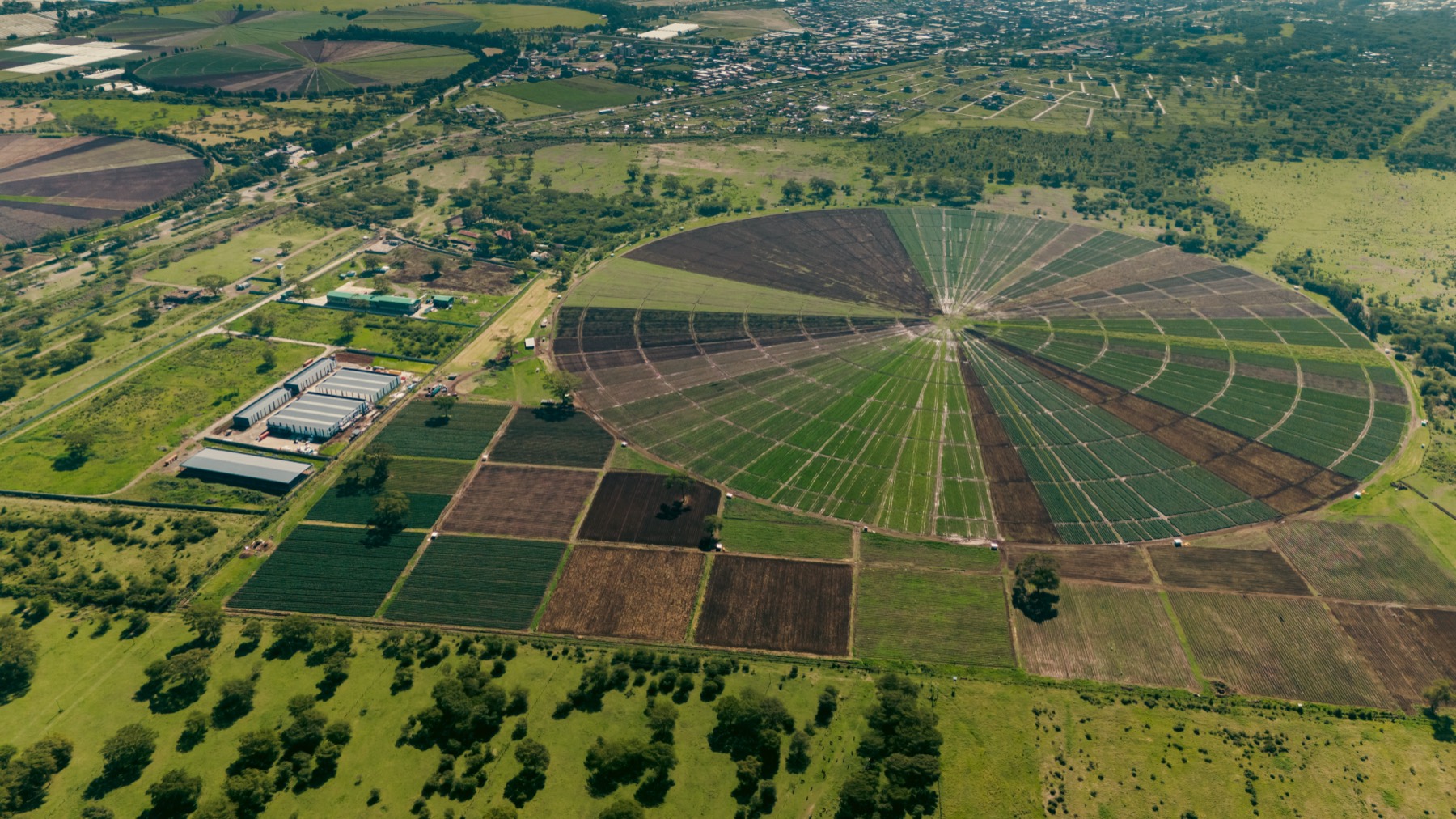
Freeze drying removes water and keeps the rest, so whatever is on the leaf in the field ends up in the dried ingredient, more concentrated. Our herbs and vegetables are grown organically on our own farms and certified by Ecocert for USDA Organic and EU Organic.
01 — Why it matters
Whatever is on the leaf is in the pouch.
Fresh herbs and vegetables are mostly water. USDA data puts fresh basil at about 92 g of water per 100 g and parsley at about 88 g. Freeze drying removes nearly all of that water and very little else.
That is the point of the process: the cut, the color and much of the aroma stay with the dry piece. It also means everything else on and in the crop stays with it. A residue that was a trace on a fresh leaf is the same amount of residue on a much lighter dry piece, so per gram it is more concentrated.
Drying does not clean a crop, and freeze drying is not a kill step. What goes into the dryer decides what comes out. For a freeze-dried ingredient, the farming is the first quality control, which is why we grow our herbs and vegetables organically on our own farms. More on the process in our freeze-drying guide.
02 — On our own farms
Organic farming, planted to the drying schedule.
Our herbs and vegetables are grown under organic rules: no synthetic pesticides and no synthetic fertilizers. Soil fertility is built with organic matter and crop rotation, and pests are managed by the farming system first.
Organic certification also asks for records. Every input that goes on a field is written down, and organic blocks are kept apart from neighboring land by buffer zones. The certifier inspects the farms, the plant and the records, as organic rules require.
Because the farms and the plant are one operation at Lake Naivasha, the same crop is grown, picked, graded and washed, then frozen and dried the same day. It does not change hands between field and dryer, and every lot is traceable from field to pouch: farm, plot, harvest date, dryer run and packing date.
03 — What is organic
A wide range of organic crops, grown on our own farms.
Red and green chili, chives, spring onion, lemongrass, thyme, rosemary, dill, bay, curry leaves, basil, cilantro, parsley, oregano, mint, sage, tarragon, garlic, ginger, onion, tomato and sweet corn are grown under the organic rules on our own farms and certified by Ecocert for USDA Organic and EU Organic. Certificates are on request.
Custom cuts, powders and blends made from these crops carry the same certification. Other crops can be planned and grown on our own farms against your volumes; developed with you, piloted small at the plant, then scaled.
04 — The paperwork
From an organic field to your organic label.
An organic claim on your product rests on a chain of certified steps. This is our part of that chain and what you receive.
- 1
Grown and certified
The crop is grown on our own farms under organic rules. Ecocert certifies the operation for USDA Organic and EU Organic.
- 2
Dried and packed on the same site
The crop is freeze dried and cut to form at the plant at Lake Naivasha, then packed in metalized pouches, each with a lot number.
- 3
Documented
Each ingredient has a spec sheet. The organic certificates are available on request, and each lot traces back to its farm, plot and harvest date.
- 4
Used in your product
Your own certifier reviews our certificate as part of your organic plan. How you word the organic claim on your pack follows the rules of the market you sell in.
Ask for the certificates with your samples, so your certifier can review them while you run your trial.
05 — On your label
Organic and freeze-dried, two claims in one ingredient.
A buyer reading your label sees two things: the ingredient was grown organically, and it was freeze dried rather than dried with heat. Both are plain, checkable statements, and both can sit on the front of the pack or in the ingredient list, such as "organic freeze-dried basil".
Organic labelling rules differ by market and by how much of the recipe is organic. A product that is wholly or mostly organic can make a stronger claim than one where only a few ingredients are organic. Your certifier is the authority on what your finished product may say.
Read about the full range of ingredients or how we keep each lot traceable.
Questions
Questions buyers ask about organic freeze-dried ingredients.
Are FD Harvest ingredients certified organic?
The herbs and vegetables in the FD Harvest range are certified organic, USDA Organic and EU Organic, certified by Ecocert.
Who certifies your organic crops?
Ecocert certifies our operation for USDA Organic and EU Organic. The certificates are available on request.
Why does organic matter more for a freeze-dried ingredient?
Freeze drying removes the water and keeps nearly everything else, so whatever is on the fresh leaf is in the dried piece, more concentrated per gram. Starting from an organic field means no synthetic pesticides went on the crop in the first place.
Can powders and blends be certified organic?
Yes. Powders made from our organic crops can be made certified organic. Products are single ingredients and are never powdered unless you ask.
What organic paperwork do I receive?
Each ingredient comes with a spec sheet, and the USDA Organic and EU Organic certificates are available on request. Every lot is traceable to its farm, plot, harvest date, dryer run and packing date.
Can I call my product organic if I use your ingredients?
Our certified organic ingredients count toward your organic claim, but what your finished product may say depends on its full recipe and the rules of your market. Your own certifier decides.
Contact us to discuss your product requirements.
Tell us which ingredients, which cut, and what you are making, and we will ship free samples from the plant with a spec sheet for each and the organic certificates on request.
Contact us